Perched on the slopes of Prospect Mountain in Estes Park, Colorado, the Crags Lodge stands as a testament to early 20th-century mountain hospitality. Built in 1914, this three-story wooden lodge served as a welcoming retreat for visitors drawn to the majestic Rocky Mountains. Today, it remains a cherished piece of Colorado’s heritage tourism story.
Listed on the National Register of Historic Places in 1998, the lodge embodies the spirit of an era when Rocky Mountain National Park was just taking shape and adventure seekers were discovering the breathtaking beauty of Colorado’s high country. Its story intertwines with the conservation movement and the visionaries who helped preserve these mountains for generations to come

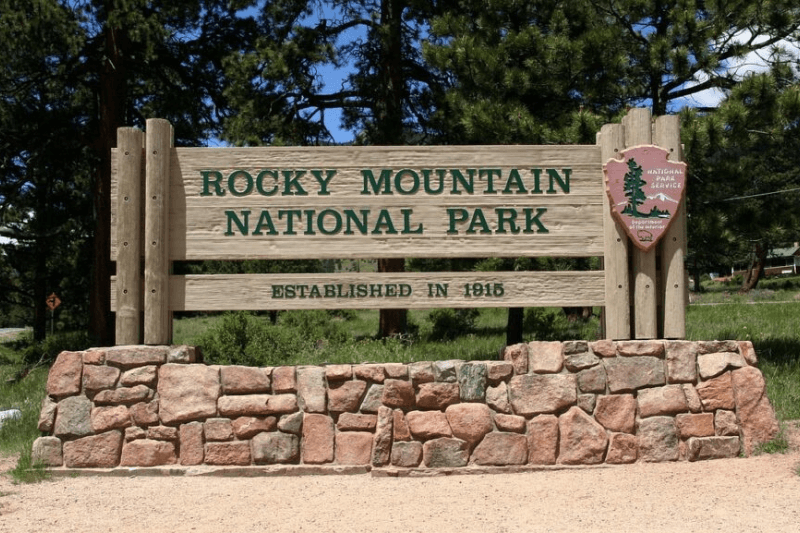
The lodge opened during the transformative years surrounding Rocky Mountain National Park's establishment in 1915, playing a vital role in Estes Park's emergence as a premier mountain destination.

Built and operated by Enoch "Joe" Mills, younger brother of Enos Mills, the "Father of Rocky Mountain National Park", the lodge carries a direct connection to the early conservation movement that shaped Colorado's wilderness protection.
Officially listed on the National Register of Historic Places on July 1, 1998 (NRIS #98000814), acknowledging its architectural and cultural importance to American mountain tourism history
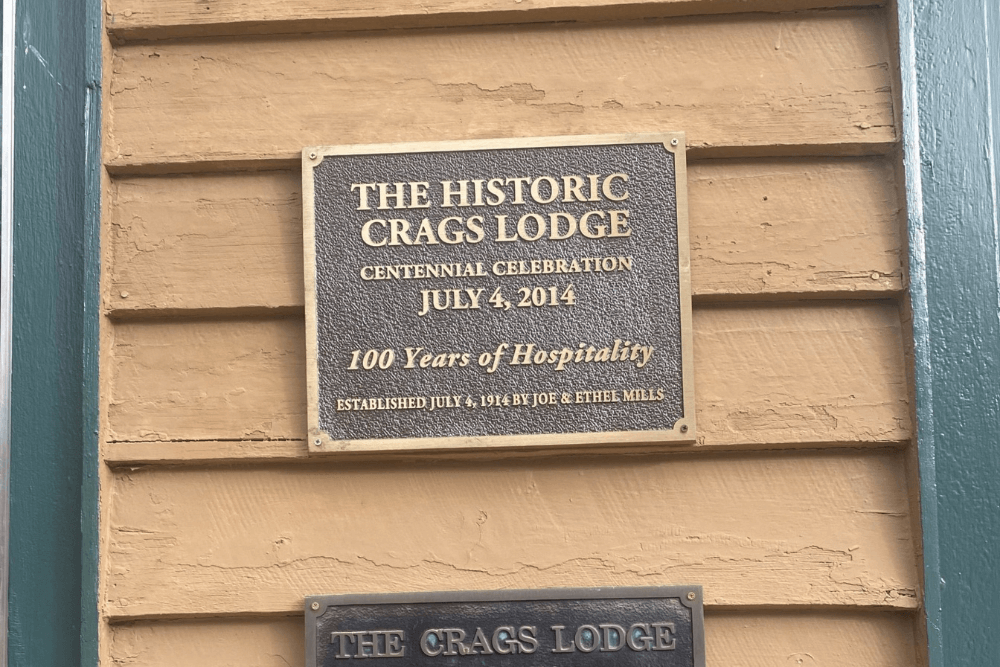
The Crags Lodge exemplifies authentic mountain architecture4a three-story woodframe structure with shingle siding that appears to grow organically from Prospect Mountain’s granite bedrock. This wasn’t mere construction; it was integration with the landscape itself.
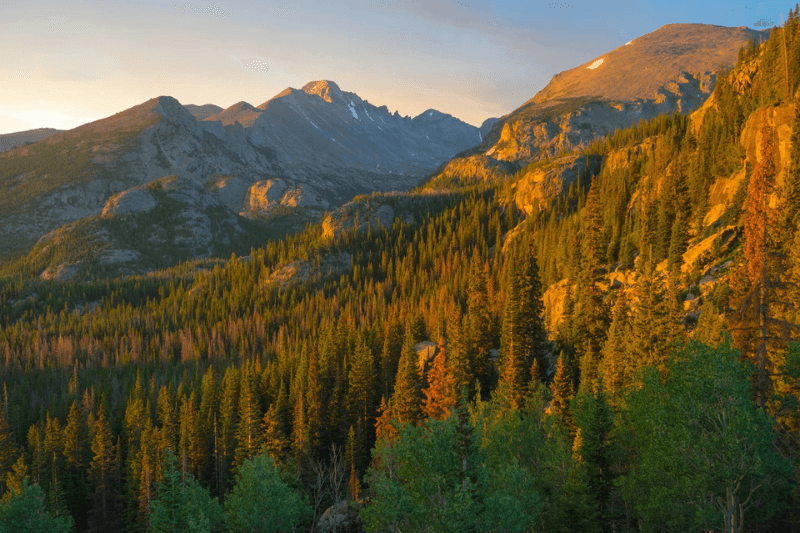
The lodge takes its evocative name from “The Crags,” a dramatic granite outcrop that dominates the nearby skyline. These ancient rock formations and sweeping ridgelines aren’t just scenery, they’re essential to the property’s identity and authentic brand DNA.
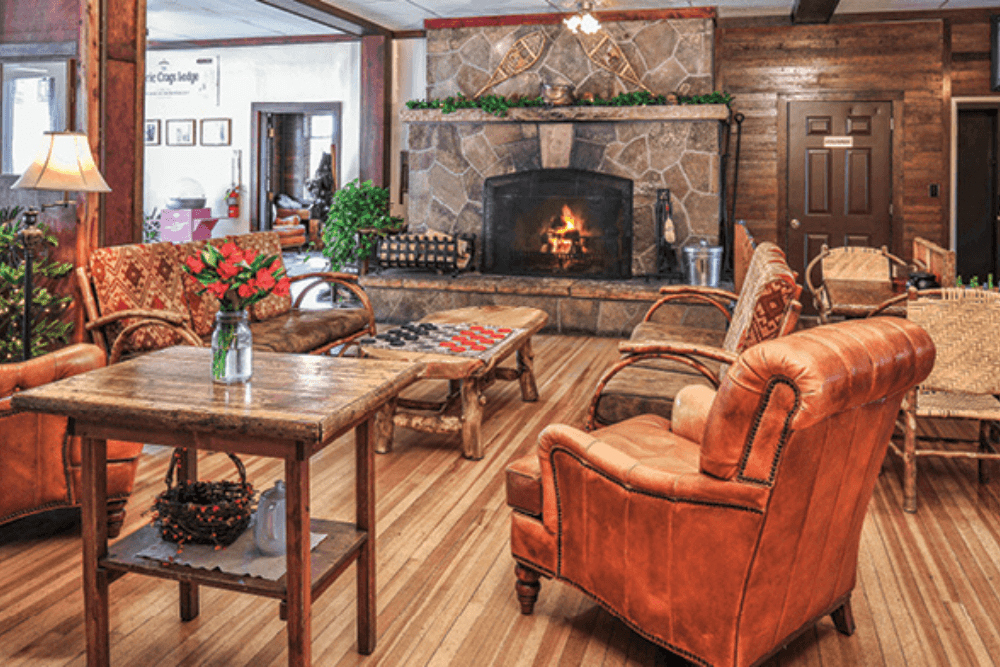
Historic details tell the story: vintage postcards depicting the “friendly house on the hill,” communal dinners where guests shared stories of their mountain adventures, and the warm, timber-framed gathering spaces that made visitors feel immediately at home. These period touches offer rich material for contemporary interpretation.